LA’s Golden Mean
If Los Angeles had a true center of gravity, it would be Mid-Wilshire. Known across the city for its concentrated Museum Row, 1920s Art Deco history, and trendsetting dining corridors like Sycamore and Little Ethiopia, Mid-Wilshire is where historic LA glamour meets a fast-evolving modern lifestyle. It’s a neighborhood of two speeds: lively main avenues packed with cafes, towers, and museums, dropping right off into quiet, shady neighborhoods.
Where & what is Mid-Wilshire?
Mid-Wilshire sits right in the middle of LA between Downtown and the Westside. A huge neighborhood, it spans roughly 2.5 miles from north to south (3rd Street to Pico Boulevard) and nearly 3 miles from east to west (Fairfax Avenue to Crenshaw Boulevard).
Mid-Wilshire gets its name from Wilshire Boulevard—the iconic east-west street named after 1890s developer Henry Wilshire. But over the decades, the name stretched far beyond the main drag to include blocks of homes for miles north and south of the boulevard.
That’s why "Mid-Wilshire" can mean two different things depending on who you ask: the bustling museum strip along Wilshire Boulevard, or the quiet, tree-lined neighborhood streets down toward Olympic and Pico.
Rather than one single monolithic neighborhood, it’s really a collection of distinct micro-pockets that all share the same central footprint.
What neighborhoods does it include?
- Miracle Mile & Museum Row: Wilshire Boulevard is the main commercial strip, lined with mid-rise apartment buildings and major cultural spots like LACMA and the Academy Museum. Expect heavy traffic, high energy, and a real big-city rhythm.
- The Sycamore District (La Brea Corridor): Centered along La Brea and Sycamore, this area is all about great coffee, outdoor tables, and people-watching. You’ll find heavy-hitter food spots like République and The Sycamore Kitchen, alongside walkable side streets lined with creative studios, vintage shops, and local galleries.
- Little Ethiopia: Designated as an official city landmark in 2002, this stretch of Fairfax Avenue between Olympic and Whitworth is where locals go for incredible Ethiopian food. It’s lined with family-run dining rooms, traditional coffee houses, and small grocers serving the local diaspora and food lovers from across the city.
- Historic Enclaves: (Step just a block or two off the main avenues, and the high-rises give way to quiet, tree-lined streets. These neighborhoods are packed with pre-war character—mostly 1920s Spanish Revivals, Craftsman bungalows, and classic multi-family duplexes.
What’s the architecture and vibe like?
While Art Deco towers and landmark museums get all the press, Mid-Wilshire's day-to-day vibe really depends on which pocket of the neighborhood you're in.
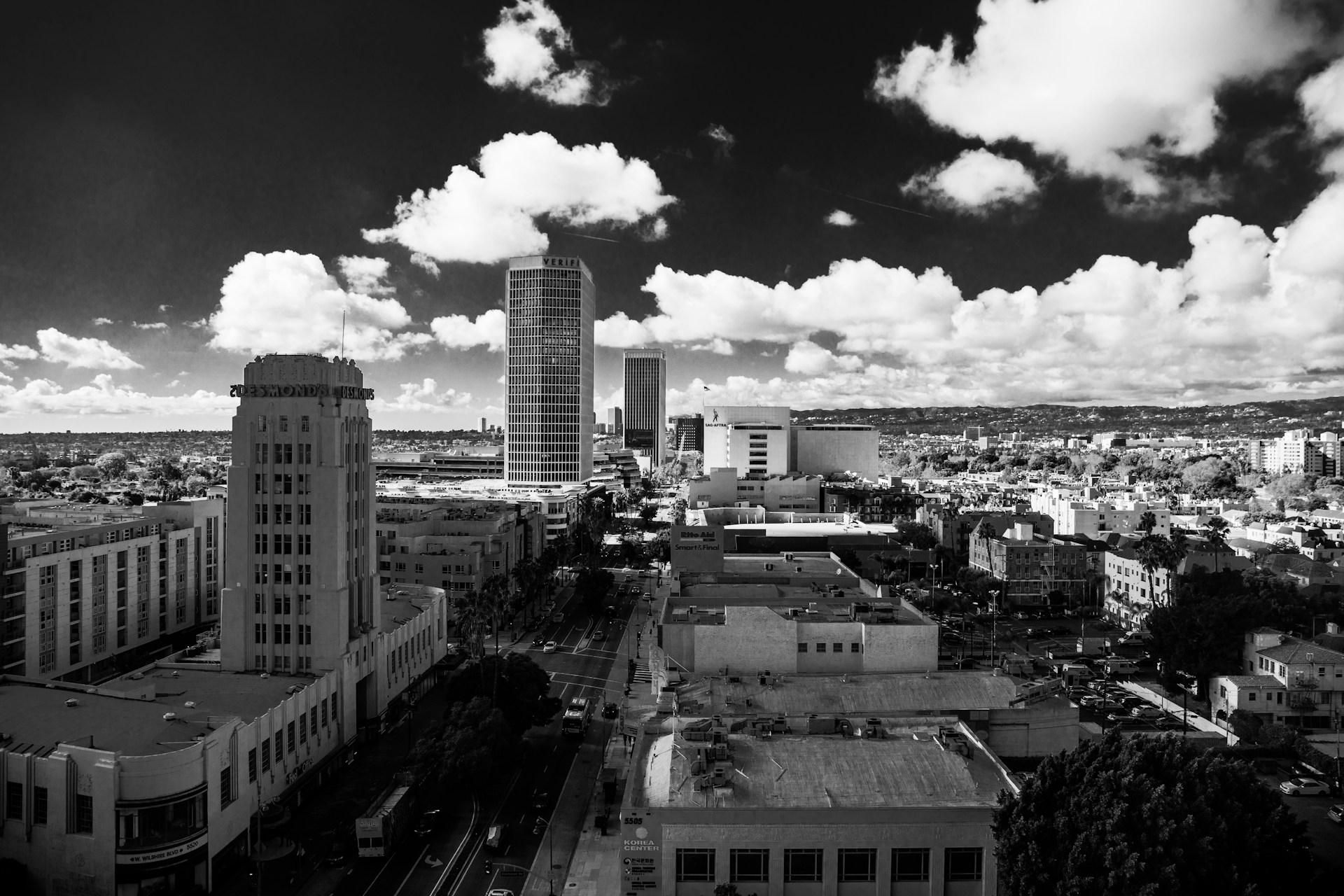
- Art Deco & Streamline Moderne Landmarks: Wilshire Boulevard is lined with 1920s and 30s commercial architecture like the 1929 Desmond’s tower, the neon marquee of the El Rey Theatre, the Zigzag Moderne spire of the E. Clem Wilson Building, and the gold-cylinder corner of the former May Company (now Saban) Building.
- Contemporary Heavy-Hitters: World-class modern architecture includes Renzo Piano’s glass-and-concrete sphere at the Academy Museum, and Peter Zumthor’s serpentine David Geffen Galleries at LACMA.
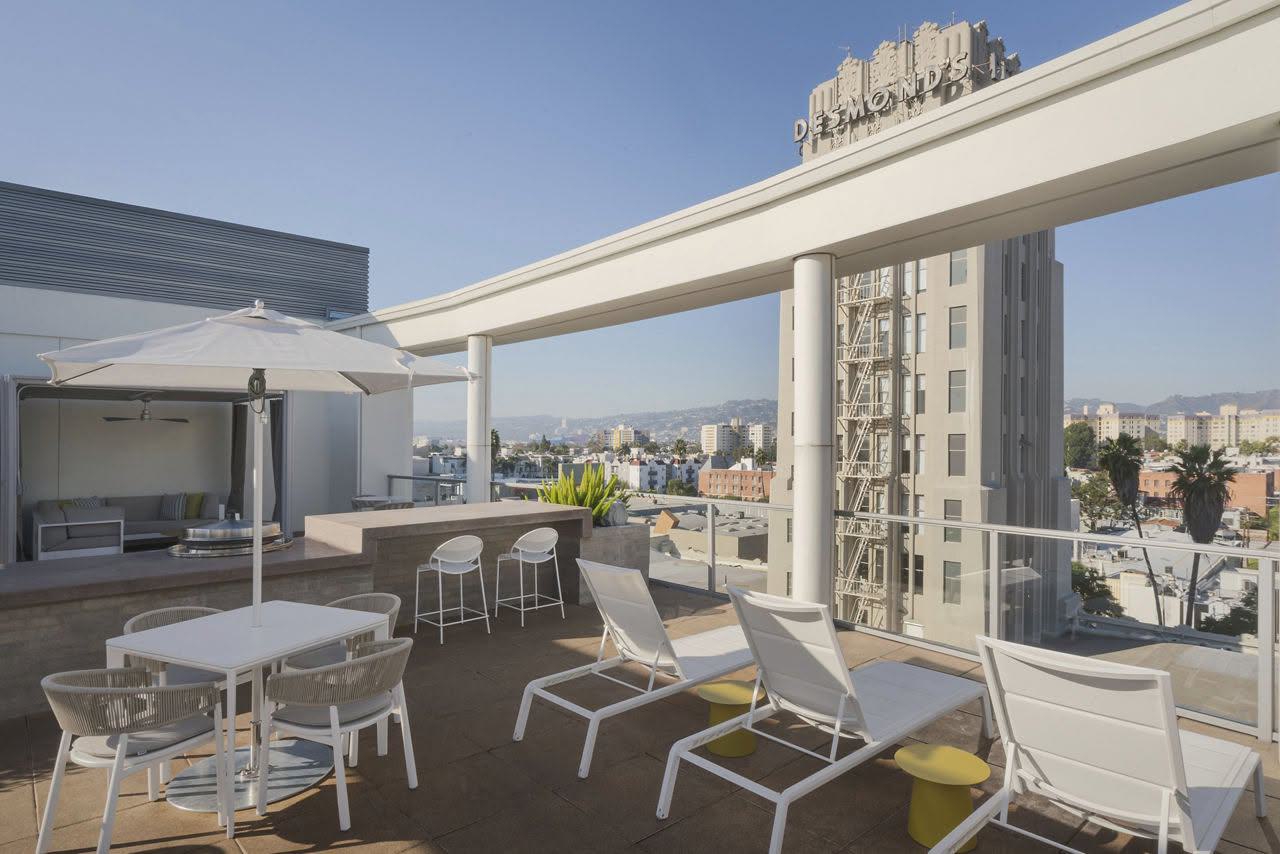
- Newer Builds with Historic Cues: Newer residential buildings—like The Desmond at Wilshire—take design cues from the neighborhood's historic architecture. Built right next to the original 1929 Desmond’s tower, the property pairs clean lines and dark metal accents with street-level shops, live/work layouts, and a roof deck with wide views of the city.
- Quiet Residential Streets: Just a block off Wilshire, tree-lined neighborhoods like Sycamore Square and Wilshire Vista place multi-million dollar single-family homes along1920s Spanish duplexes and historic courtyard apartment buildings.
- Converted Industrial Brick: Along Sycamore Avenue, 1920s industrial warehouses and brick auto repair shops have been transformed into contemporary art galleries, local boutiques, and open-air restaurant patios.
- 1930s Storefronts: South Fairfax and Little Ethiopia are defined by single-story 1930s storefronts set right against the sidewalk. Exposed brickwork, canvas awnings, and vintage transom windows give this dining and shop corridor a distinct village-scale feel.
What are the major landmarks & attractions?
Most of Mid-Wilshire's most-recognized buildings and cultural institutions are located along Miracle Mile and Wilshire Boulevard.
- Museum Row: This dense cultural stretch along Wilshire Boulevard houses five major institutions: the Los Angeles County Museum of Art (LACMA), the Academy Museum of Motion Pictures, the Petersen Automotive Museum, Craft Contemporary, and the active Ice Age excavation sites at the La Brea Tar Pits and Museum.
- Wilshire Ebell Theatre & Complex: On the eastern edge of Mid-Wilshire, this 1927 Italian Renaissance Revival landmark features a 1,238-seat historic theater, lush private courtyards, and an iconic red-tile roof.
- E. Clem Wilson Building: Sitting at Wilshire and La Brea, this 1930 Zigzag Moderne tower with its copper spire and grand classical colonnade base forms the central visual landmark of the boulevard.
- 1929 Desmond’s Tower: An Art Deco commercial landmark featuring a ten-story terra-cotta facade and central spire, originally built as a flagship department store during Wilshire's first boom.
- El Rey Theatre: A preserved 1936 Art Deco landmark with a signature red neon marquee. One of LA's premier, smaller music venues.
- Pan Pacific Park & Holocaust Museum LA: Mid-Wilshire’s primary green space offers 28 acres of sports fields, walking loops, and shady picnic lawns. On the park's northwest corner sits the newly expanded Holocaust Museum LA, featuring a modernized 50,000-square-foot campus with above-ground pavilions and an outdoor garden integrated into the park landscape.
Where are some good places to eat and drink?
Mid-Wilshire’s dining scene is concentrated across three distinct pockets: directly along the main Wilshire strip, up in the trendy Sycamore District to the north, and down in the Little Ethiopia corridor to the south.
The Sycamore District:
- Tartine Sycamore: A massive converted industrial bakery and café with high ceilings and a sunlit patio, famous for morning espresso, sourdough, and pastries.
- Mizlala: A lively counter-service spot offering modern Middle Eastern street food like wood-grilled skewers, crispy falafel, and dips on a dog-friendly patio.
- République: Located directly on La Brea Avenue in a historic 1928 Charlie Chaplin-built brick complex, serving world-class French pastries, house-roasted coffee, and breakfast/brunch.
Little Ethiopia Corridor (South Fairfax Avenue):
- Messob: A cozy, long-running neighborhood favorite since 1985, known for its family-style dining and massive vegetarian combination platters.
- Merkato: A hybrid market and restaurant on South Fairfax—the front storefront sells imported spices, teff, and fresh injera, while the rear dining space serves full sit-down Ethiopian stews and veggie platters.
- Meals by Genet: A celebrated dining institution famous for chef Genet Agonafer's rich, two-day slow-cooked doro wat (spiced chicken stew).
- Rosalind’s Ethiopian Restaurant: The original pioneer of South Fairfax, offering classic Ethiopian dishes alongside a relaxed atmosphere, mud-hut-inspired interior, and full bar.
Miracle Mile & Wilshire Corridor:
- Met Her At A Bar & Met Him At A Bar: A sister duo across La Brea Avenue. Met Her handles daytime brunch with Belgian waffles, while Met Him serves handmade pasta and wine at night.
- Yuko Kitchen: A lush, plant-filled Japanese cafe known for fresh rice bowls, bento lunches, and green tea cookies.
- LACMA Campus Dining: Currently features an on-site Erewhon outpost serving quick bites and smoothies alongside plaza picnic areas next to Urban Light—with a brand-new full-service restaurant and wine bar opening on campus in fall 2026.
How do most people get around?
- Do You Need a Car?: It depends where you live. Residents along Miracle Mile (like The Desmond) can easily live car-light, walking to groceries, dining, museums, and transit. In the quiet residential side streets, a car is still helpful.
- Subway (Metro D Line): Stations at Wilshire/La Brea and Wilshire/Fairfax offer fast, direct train rides into Koreatown and Downtown LA.
- Buses: Major lines run frequently along Wilshire, La Brea, Fairfax, and Olympic boulevards for easy trips across town.
- Walkability: Daily errands, dining, and gallery hopping are very walkable inside key areas like Miracle Mile, the Sycamore District, or Little Ethiopia.
- Driving: Wilshire and Olympic boulevards remain the primary commuter drives across the neighborhood. Expect heavy rush-hour traffic and strict street-parking enforcement along main drags.
Who Enjoys Living Here?
Mid-Wilshire's extensive range of housing options attracts a demographic that's just as diverse. While residential side streets feel suburban and quiet, the overall area skews pretty heavily toward renters. Apartment buildings along Wilshire Boulevard, 8th Street, and Olympic bring a steady stream of younger residents and transplants moving to LA for the first time.
- Young Professionals: Sitting between Downtown LA, Hollywood, and Beverly Hills, Mid-Wilshire is great for professionals who need a central location near LA's corporate, media, and entertainment hubs. Locals in their mid-20s to late 30s are far enough along in their careers to afford the neighborhood, but still want to be near bars, restaurants, and museum events.
- Creatives & Foodies: Artists, designers, and food lovers are drawn to the independent restaurants and galleries along La Brea, Sycamore, and Little Ethiopia attract—plus nearby LACMA and the Academy Museum.
- Homeowners & Families: Interior residential areas like Sycamore Square, Wilshire Vista, and Oxford Square are home to long-term residents.
What's the Metro D Line Extension?
A lifestyle game-changer for Mid-Wilshire residents, the Metro D Line is an ambitious, modern expansion that extends rail service beneath Wilshire Boulevard from Koreatown to the Westside:
- New Local Stations: Adds 3.9 miles of track with new underground stops at Wilshire/La Brea, Wilshire/Fairfax (Museum Row), and Wilshire/La Cienega.
- Traffic-Free Commutes: Cuts travel times significantly, connecting Miracle Mile to Downtown LA in just 20 minutes.
- Future Expansion: Remaining construction is extending the line further west through Beverly Hills, Century City, and UCLA in Westwood.
Is Mid-Wilshire expensive?
Mid-Wilshire sits in LA's upper-tier bracket. Living here costs less than Bin everly Hills or coastal Santa Monica, but still carries a premium over neighboring spots like Koreatown or Palms because you're paying for high walkability, more upscale buildings, and central transit.
- Housing: Rental rates reflect high walkability, historic architecture, and direct subway access, while single-family homes on bordering streets like Hancock Park command multi-million-dollar luxury prices.
- Everyday Living: Dining and groceries balance out easily—you can keep monthly spending down at Trader Joe's and Ralphs, or pop into high-end spots like Erewhon, local wine bars, and boutique cafes when you want to splurge.
How safe is it?
Mid-Wilshire is widely considered a safe, active, and comfortable urban neighborhood:
- Street Environment: Well-lit commercial strips like Miracle Mile and Sycamore draw steady foot traffic, making daytime and evening walks feel easy and secure.
- Property Security: Secure apartment garages and package rooms handle the area's main concern—opportunistic property theft.
- Daily Mindset: Standard metropolitan awareness (locking car doors and keeping valuables out of sight) is usually all that's required.
The Heart of Miracle Mile
Located right on Wilshire Boulevard, The Desmond puts the very best of Mid-Wilshire right at your doorstep. Built adjacent to the iconic 1929 Desmond’s tower, the community pairs modern, light-filled apartments and live/work layouts with private amenities—including a sky deck overlooking the city skyline, a fitness center, and street-level shops. Contact us to learn more and explore move-in specials.